The judgement
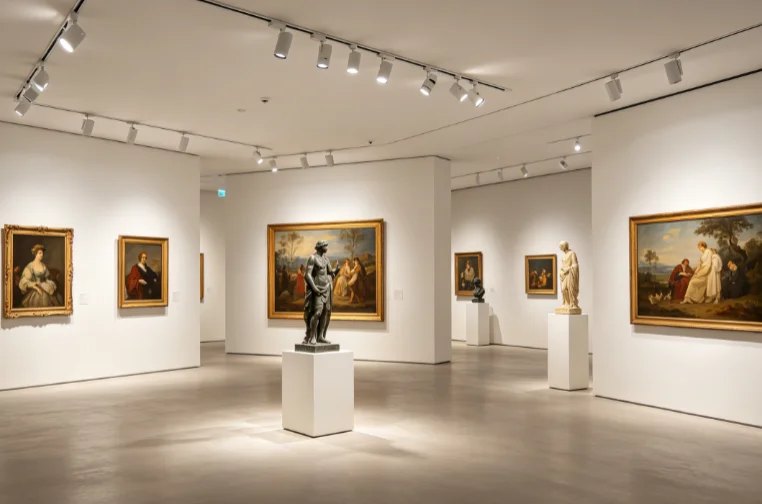
Galleries, museums and exhibition spaces change their content all the time, and that's the strongest argument for track. A fixed scheme designed around one hang is wrong the moment the next show arrives. Track lets heads move along the wall with the work and be re-aimed for each piece, which is why it's the default in most exhibition rooms.
The judgement we'd make first is about what the visitor should not see. They shouldn't see a bright stripe across the top of a canvas, a dark band at the bottom, a reflection of the head in the glazing, or the frame casting a hard shadow into the picture. If those things are absent, the room usually reads as well lit, even if nobody could say why.
Good gallery light is invisible. Visitors remember the work, never the beam.
Distance, angle and beam, described without figures
Three things set the lit patch on a wall: how far the track is from it, the angle the head is aimed at, and the beam spread of the head. Move the track further from the wall and the patch grows and softens; move it closer and the patch tightens and the aiming angle gets steeper, which brings frame shadows and glare on glazing with it. The right combination depends on ceiling height, the size of the work and the head itself, so we describe the logic here and confirm the beam per model rather than printing a number that would only fit one room.
A practical habit: aim so the centre of the beam lands near the visual centre of the work, then check the top and bottom edges for falloff. Narrow beams suit small works and objects in cases; wider beams, or several heads overlapping, suit large canvases and walls hung salon-style. Adjustable-focus COB heads, on selected models, let one head cover both without a swap.
Colour rendering as a question to ask
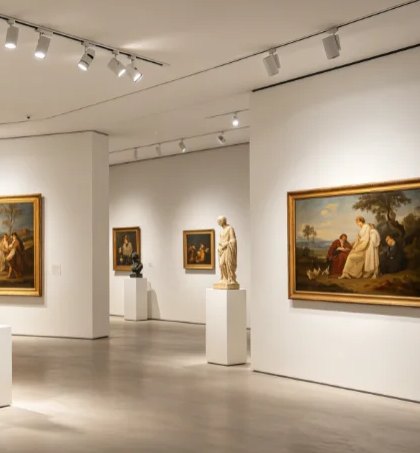
CRI, the colour rendering index, describes how faithfully a light source shows colours compared with a reference source. For paintings, textiles and photography it's one of the most important fields on a spec sheet, because a weak value can flatten reds and skin tones in a way curators notice at once. It's a per-model field: ask for it on the spec sheet for the exact head you're quoting, and look at samples against real work before approving.
Colour temperature works the same way. It should suit the collection and stay consistent across every head in the room, which is easier when one head family lights the whole space.
Even walls and the next hang
Evenness comes from spacing more than from any single head. Heads spaced regularly along the track, at the same distance from the wall and aimed consistently, give a wall a steady wash that individual spots can then lift. Leave track length beyond the current hang and keep spare heads, because the next exhibition will want light where this one didn't.
Museums add their own questions: conservation limits on light exposure for sensitive works, controls that let curators lower levels, and maintenance access over cases and plinths. Those are confirmed per project with the conservator and per model with us, never assumed from a catalogue.