The judgement
Diners judge a restaurant within seconds, and the light does much of the judging for them. Too bright and even, and the room feels like a canteen; too dark, and menus become a chore and food loses its colour. The judgement we'd make first is about warmth with a purpose: a room that feels relaxed, where faces look comfortable across the table and the plate is still the most legible thing on it.
Track suits restaurants for a practical reason. Tables move, layouts change between lunch and dinner, and private areas get rearranged for events. Heads on a rail can follow the tables instead of leaving pools of light over empty floor, and that flexibility matters more over the life of a fit-out than any single fitting choice.
Light the table, not the diner. Faces look best lit by what comes back off the cloth and the walls.
Tables, bar and circulation
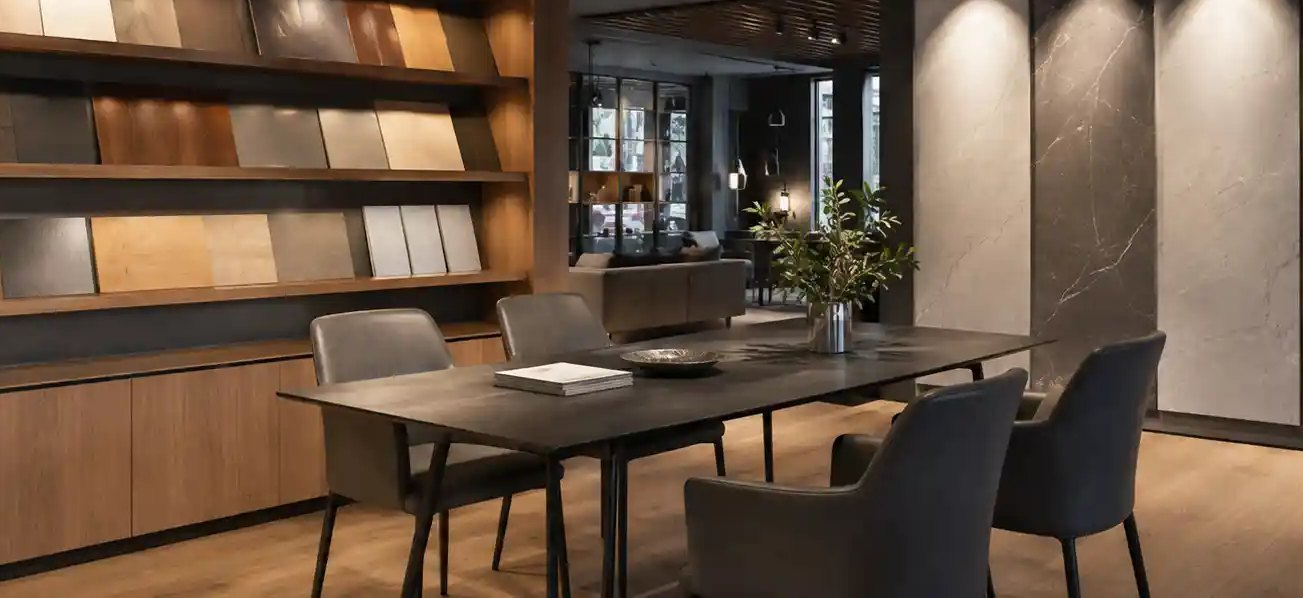
Over tables, the aim is a soft, contained patch that lands on the surface rather than on heads and shoulders. A head aimed straight down onto the table centre keeps glare away from seated guests, and the light reflected from the tabletop does more for faces than any direct beam. If tables are going to move, plan the track along the line they'll most often sit on, and keep a few spare heads for layouts you haven't seen yet.
The bar is the room's feature wall. Bottles, back-bar shelving and the counter can take more contrast than the dining floor, and that contrast draws guests through the room. Watch the bar staff's sightlines: heads aimed across the counter can shine straight into their eyes for an entire shift.
Circulation routes, entrances and the path to the restrooms need calm, even light that lets people move safely without competing with the tables. Downlights often do this job better than track, and they leave the track free to concentrate on what guests should look at.
Scenes and dimming: questions, not assumptions
Most restaurants run more than one scene: brighter for lunch or cleaning, lower and warmer for dinner, sometimes a separate setting for events. That's where dimming and grouping come in, and it's also where projects most often go wrong on paper. Whether a particular head dims, how smoothly it dims, and on which control system, are questions confirmed per model and per system. The number of wires in a rail doesn't settle them.
Colour temperature belongs in the same conversation. A warmer source suits most dining rooms, but food, finishes and the brand all pull on that choice, so we'd confirm the colour temperature per model against samples rather than pick it from a list. Colour rendering matters for food more than people expect; what it describes, and how to ask for it, is covered in the gallery essay.
Which heads tend to fit
Dimmable COB heads, on selected models, are a common choice over tables and the bar because they give a clean, contained patch. GU10 and MR16 heads suit lower-output accent work on shelving and artwork. E27 heads with PAR20 or PAR30 lamps make sense where the operator wants to change lamps locally. Every option has to match the rail's wire system and the supply voltage, which we confirm per model before quoting.